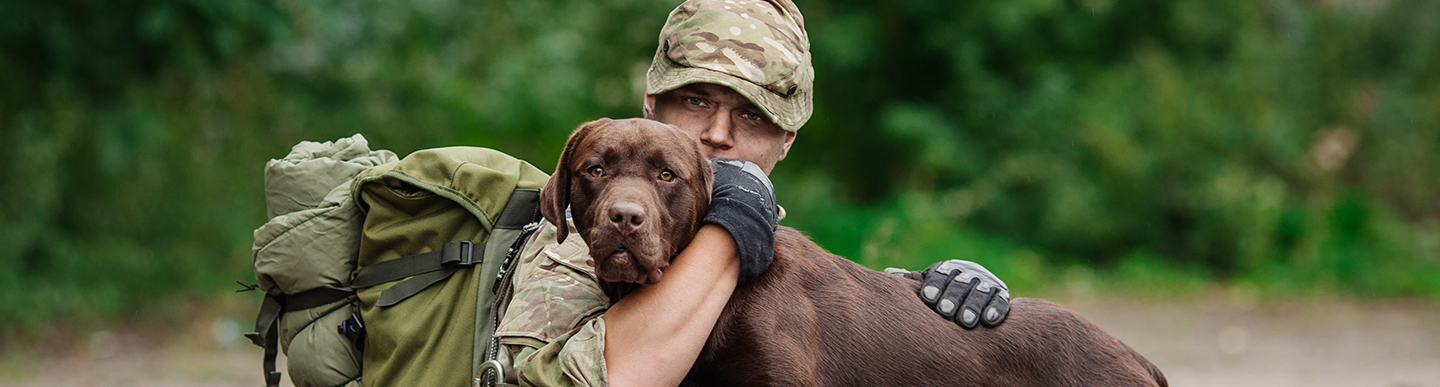
ABOUT THE PRE-APPLICATION FOR A SERVICE DOG FOR A VETERAN IN SAN DIEGO
NOTICE MARCH 4, 2026
We’re sorry but we’re not accepting Pre-Applications for Service Dogs for Veterans at this time. We simply don’t have enough dogs available to consider for veteran placement.
ARTICLES THAT MAY BE OF INTEREST:
- This article explores recent research on the impact of service dogs in PTSD treatment.
- “All IT TAKES IS COURAGE” is in San Diego Veterans Magazine and is written by one of our service dog graduates and military veteran Renee Fernandez.
Our Service Dogs are trained to:
- Retrieve items dropped or out of reach
- Prevent serious falls by helping an ambulatory partner transfer
- Bring the phone in emergencies or on command
- Activate adaptive switches to aid with daily living chores
- Retrieve a wheelchair out of reach
- Aid in undressing, including removal of shoes and sweatshirt
- Put trash in containers or laundry in a basket
- Open or close doors, drawers, cupboards
- Take clothes out of the dryer
- Perform other specialized tasks required
PLEASE KNOW THAT PAWSITIVE TEAMS DOES NOT TRAIN OR PLACE SERVICE DOGS FOR THE FOLLOWING:
- Seizure response
- Heart alert
- Developmental disabilities
- Diabetic Alert
- Guiding for visually impaired
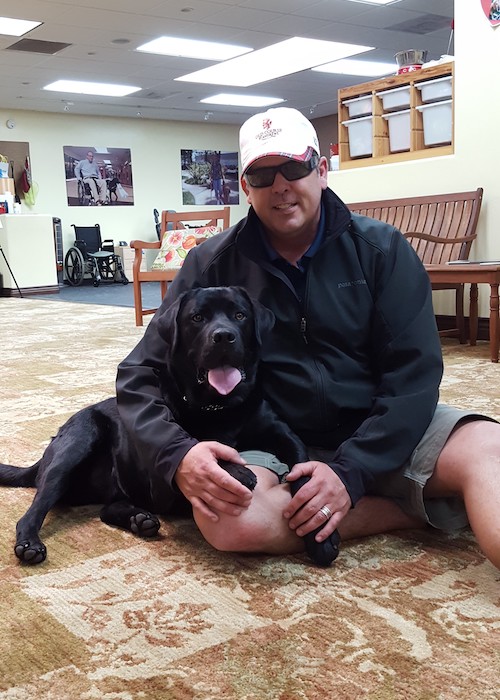
Eligibility Requirements
- Do you live in San Diego County with no plans of moving out of the area for at least 12 months?
- Do you have a mobility-limiting disability and/or have you been diagnosed with Post Traumatic Stress Disorder (PTSD)?
- Are you physically and financially able to take full responsibility for the dog after certification?
- Are you willing to commit to a three to four month transition training schedule? This will involve meeting with a trainer three times a week during this time.
- Can you provide a copy of your DD214 and status as Honorable Discharge?
The Matching Process:
We wish we could provide a dog to each person who contacts us, but we are careful not to make promises we can’t keep as the match between a dog and a disabled handler is an important part of the formula for a successful team. We do not place dogs based on the date a person first contacts us. Because we are a small program and cannot guarantee a match for every applicant, we urge you to check the website for Assistance Dogs International as they have links to all their members organizations and many place dogs with veterans.
The Patriots Initiative
Pawsitive Teams has been accredited by The Patriots Initiative (TPI), and determined to be one of the finest in the nation supporting America’s armed forces service members, veterans and their families. The Patriots Initiative (TPI), a 501(c)(3) nonprofit, focuses its efforts on evaluating and providing support to dozens of nonprofit organization across the nation. These nonprofit agencies, which are carefully evaluated and accredited by TPI, provide significant, effective services and programs specifically tailored for active duty military families, wounded warriors, and veterans. The TPI Board of Directors is comprised of proven professional and community leaders, many of whom have served in the military. The mission of TPI has been carried forward by a dedicated professional staff, which has raised charitable funds to support and honor marines, sailors, airmen, soldiers and their families.